
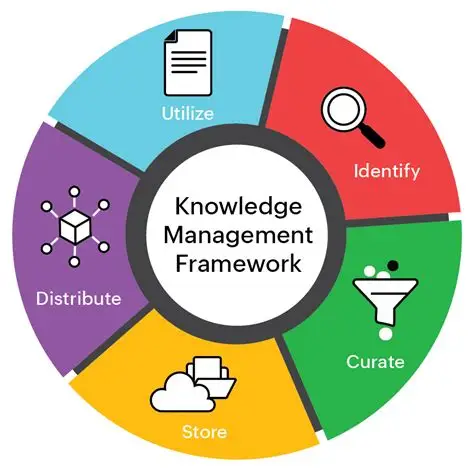
What is a KM Framework
A Knowledge Management (KM) framework is a structured approach that organizations use to capture, organize, share, and effectively use knowledge to achieve their goals. In today’s knowledge-driven economy, having a clear KM framework is essential for improving decision-making, fostering innovation, and maintaining a competitive advantage.
Components of KM Framework
At its core, a KM framework typically consists of several key components. The first is knowledge creation and capture, where information is generated through research, experience, or collaboration. This includes both explicit knowledge (documents, databases, reports) and tacit knowledge (skills, insights, and expertise held by individuals). Organizations must establish systems and cultures that encourage employees to document and share what they know.
The second component is knowledge organization and storage. Once knowledge is captured, it needs to be structured in a way that makes it easy to retrieve. This often involves using digital repositories, content management systems, or intranets. Proper classification, tagging, and indexing are critical to ensure that valuable information does not get lost.
Another essential element is knowledge sharing and dissemination. A strong KM framework promotes collaboration through tools such as internal communication platforms, communities of practice, and regular knowledge-sharing sessions. Encouraging a culture of openness and trust is vital, as employees must feel comfortable sharing their insights and experiences.
The final component is knowledge application and reuse. Knowledge becomes valuable only when it is used to solve problems, improve processes, and support strategic decisions. Organizations should integrate knowledge into workflows and continuously evaluate how effectively it is being applied.
Supplement Components
In addition to these components, a successful KM framework is supported by technology, people, and processes. Technology provides the tools for managing knowledge, people drive its creation and sharing, and processes ensure consistency and sustainability.
Conclusion
In conclusion, a well-designed KM framework enables organizations to transform knowledge into a strategic asset. By systematically managing knowledge, organizations can enhance efficiency, support learning, and remain adaptable in a rapidly changing environment.